“Understanding the vital role of World Heritage Forests, carbon sinks, and community conservation in a warming world.”
Forests provide more than just shade and beauty. They also help our planet breathe. Some of the most significant of these forests are UNESCO World Heritage Sites, which are home to incredible biodiversity and powerful natural systems that store billions of tonnes of carbon. This Blog explains why these forests are more important than ever today, as well as what we must do to protect them,using Maya’s story and real scientific insights.
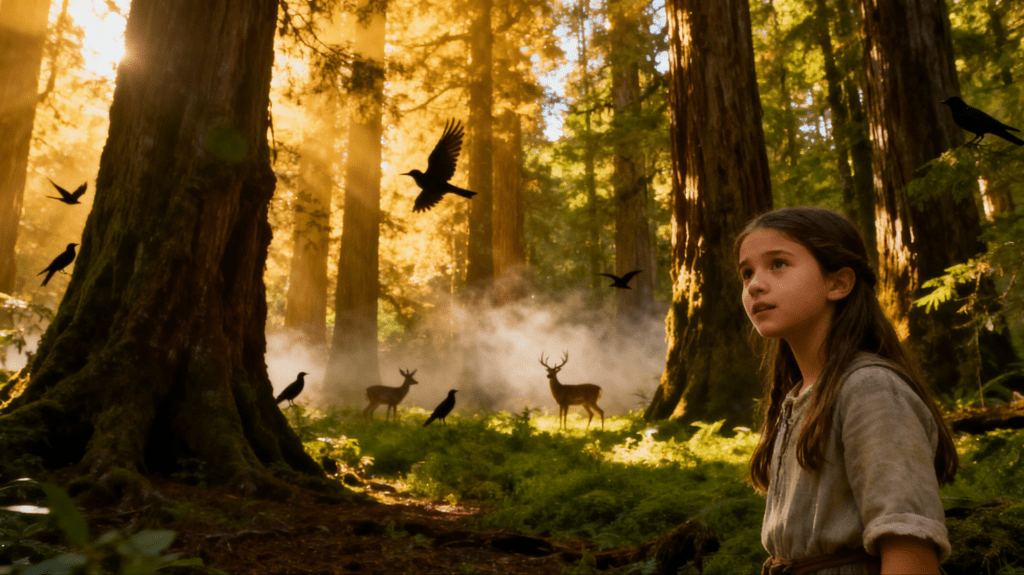
Listen! A small village near a vast,dark and beautiful forest. In the village a curious girl named “Maya” lived with her family. Her family and other villagers were dependent on the bearer forest for their life and economy.The villagers called this forest the “Magic Forest”. It was special not just to them, but to the whole world. It was in a special list made by people from many countries, who promised to protect the world’s most amazing places.
Maya and other children loved to play beneath the giant trees and watch bright birds and monkeys swing in the branches.They always enjoyed going to this magic forest, But what made the forest magical wasn’t just its beauty or animals. Grandma explained to them, “These trees are like the lungs of Earth. The forest breathes in a gas called carbon dioxide(CO₂). This carbon dioxide is making our world hotter and stormier. They lock it away in their trunks and soil. This helps keep the air cleaner and the weather calmer for everyone, not only our village, but also the world. That is why it is called a ‘carbon sink’.”
One evening, Maya noticed people from the next town cutting trees.They collected wood and burned parts of the forest for new farmland. She saw smoke rise in the sky.Birds and animals fleeing anywhere. That night at dinner, she asked, “Why do people hurt our Magic Forest?” Dad explained, “Sometimes, people need land to grow food. They sell wood to earn money. But if too many trees are lost, the forest can not clean the air like before.Bad things can happen like more floods, hotter days, and fewer animals.”
One scorching summer, wildfires swept through the edge of the Magic Forest badly. Maya and her friends saw ash falling like grey snow from the smoke. The villagers fought hard to save their homes and animals. When the fire passed after a day, a big patch of forest was gone. The fire left black coal and ash behind it. “The forest will need many years to heal and us too,” said the village elders. “And all that carbon the trees stored is now in the air again. It will add to the world’s troubles.”
Maya wanted to help her community and forests. She and her friends joined elders and rangers to plant new trees. They stop illegal woodcutters. They speak up for their forest in village meetings. Visiting scientists showed the children how special this forest was and is! They measured not just the trees but the hidden “carbon treasure” in the soil and roots. These “carbon treasures” are saved from decade to century by forests. Even the president sent funds to help buy fire-fighting tools.Nearby towns agreed to protect forest borders together. Every year, Maya’s village hosts a festival to teach tourists about the forest and raise money for care and repairs.
Maya grew up. She saw the Magic Forest slowly recover and greenery attract. More birds came back.The water in the stream became clear again. The animals moved in. The villagers discovered that working together, respecting both the old ways and new science, made their forest healthier and their community stronger.Grandma often smiled and said to Maya “Remember, Maya, this isn’t only our forest. It’s part of the world’s family of magic places. God has given such green blessings to the whole human kind and our planet. When we care for it, we are helping the whole planet, people, animals, and even those far away we will never meet.”
Forests like Maya’s are called “World Heritage Forests.” They are special places protected by the world for their beauty, history, living organisms and environmental powers.These forests store billions of tonnes of carbon, organic- rich content and water. It helps to fight against climate change for everyone.But they face danger from fires, illegal cutting, and climate changes.Local communities, governments, and everyone worldwide can be heroes, too, by supporting these forests, sharing knowledge, and taking care of nature.If everyone acts, the story can have a happy ending, for Maya’s forest and for people everywhere.
World Heritage Forests: Our Planet’s Carbon Guardians Under Threat
Have you ever thought that some of the most beautiful and revered forests in the world do more than surprise us? These forests which are known as World Heritage forests, are not only rich in biodiversity and stunning landscapes but also act as a shield against climate change. They absorb massive amounts of carbon dioxide from the atmosphere. But despite their name and popularity, these natural wonders are now under threat.
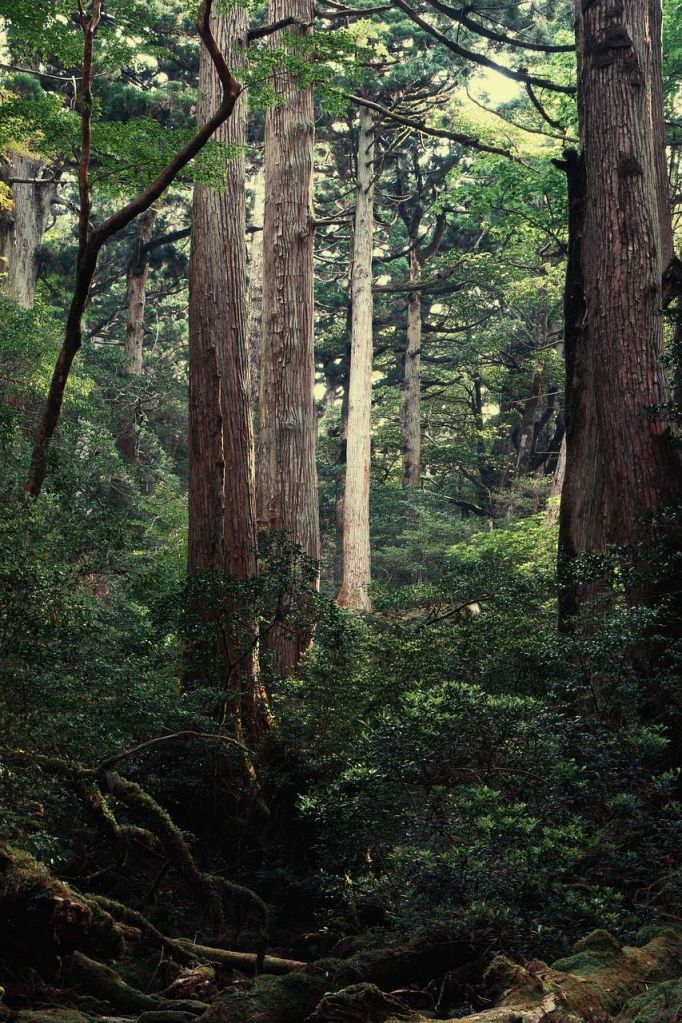
Let’s explore what makes them unique. Why they matter so much to our planet’s climate health, and what we must do to safeguard them.
What Are World Heritage Forests?
UNESCO (the United Nations Educational, Scientific and Cultural Organization) has recognised World Heritage Sites for their distinctive cultural or natural significance. About a quarter of these are designated for their natural values,many of which are vast forests that span more than 110 countries. In total, these places cover about 69 million hectares of forest area. It is almost twice the size of Germany! These protected areas range from tropical rainforests and boreal forests to amazing wetlands and mountain ranges.
World Heritage forests play vital roles:
They are home to a diverse range of plant and animal species, many of which are unique to their environment. They benefit millions of people by sustaining community livelihood, generating tourist revenue, and providing fresh water and natural protection from disasters such as floods.
Forests and the Carbon Cycle: Nature’s Climate Balancers.
Forests play a crucial role in the “carbon cycle” by absorbing and storing CO2 from the atmosphere during photosynthesis. This process, also known as carbon sequestration,slows climate change by lowering the level of greenhouse gases that warm our planet.
The world’s forests are massive “carbon sinks.” World Heritage forests are estimated to remove 190 million tonnes of CO2 from the atmosphere each year. To put that in perspective, it is roughly half of what the UK emits from fossil fuels in a year! Over centuries, these forests have stored approximately 13 billion tonnes of carbon, which is more than all of Kuwait’s proven oil reserves.
Why These Forests Are So Special
Global Impact:
The concentration of biodiversity and the sheer scale of forests found in World Heritage sites make them particularly powerful carbon “sponges.”
Regional Importance:
The Amazon, Central Africa, and some parts of Australia, New Zealand, and Europe have tropical and temperature zones.They are the largest carbon sinks in the world.
Ongoing Security:
On average,every year one hectare of World Heritage forest generally absorbs the smoke of our vehicles and has the capacity to absorb even more than that.And that doesn’t always have to be the case.Climate change is becoming more complex by the day.
Under Pressure: The Growing Threats
Despite protected status, these forests are under pressure like never before. Ten World Heritage forest sites have become net sources of carbon instead of sinks between 2001 and 2020.
What’s driving these worrying trends?
1.Climate Change and Wildfires:
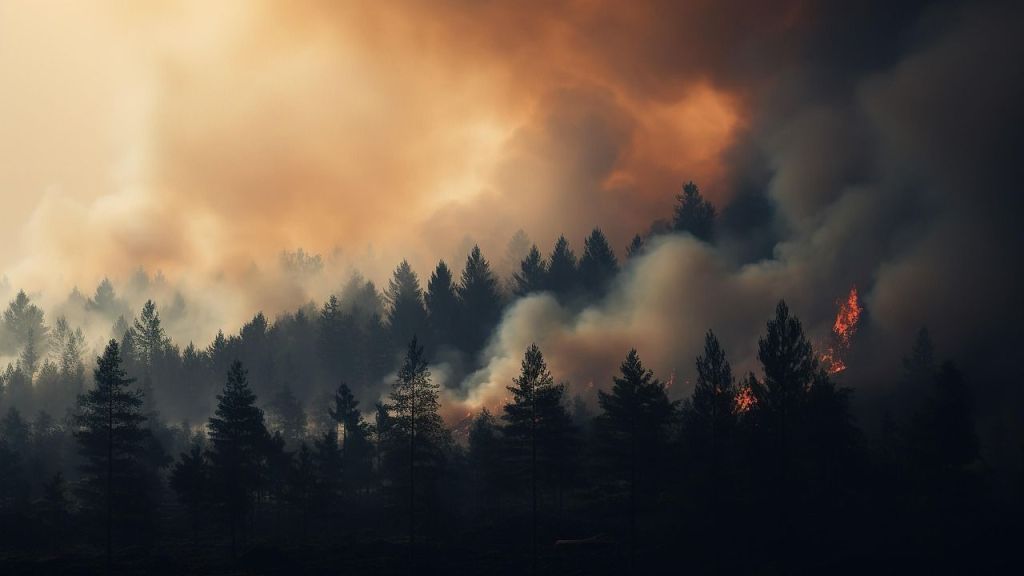
As our planet heats up,severe weather, heat waves and the associated heat island, in addition to wildfire in particular, have hit many forests hard. Significant disasters have occurred in places such as the Tasmanian Wilderness (Australia), Greater Blue Mountains (Australia), and Lake Baikal (Russia). We are witness to it.Some forest fires were so large that one year ‘s emission from them exceeded the annual fossil fuel emissions of more than half of the world’s countries.Fires not only release carbon immediately, but also they damage the ability of forests to recover and continue storing carbon in the future.
2. Human Pressures and Land Use:
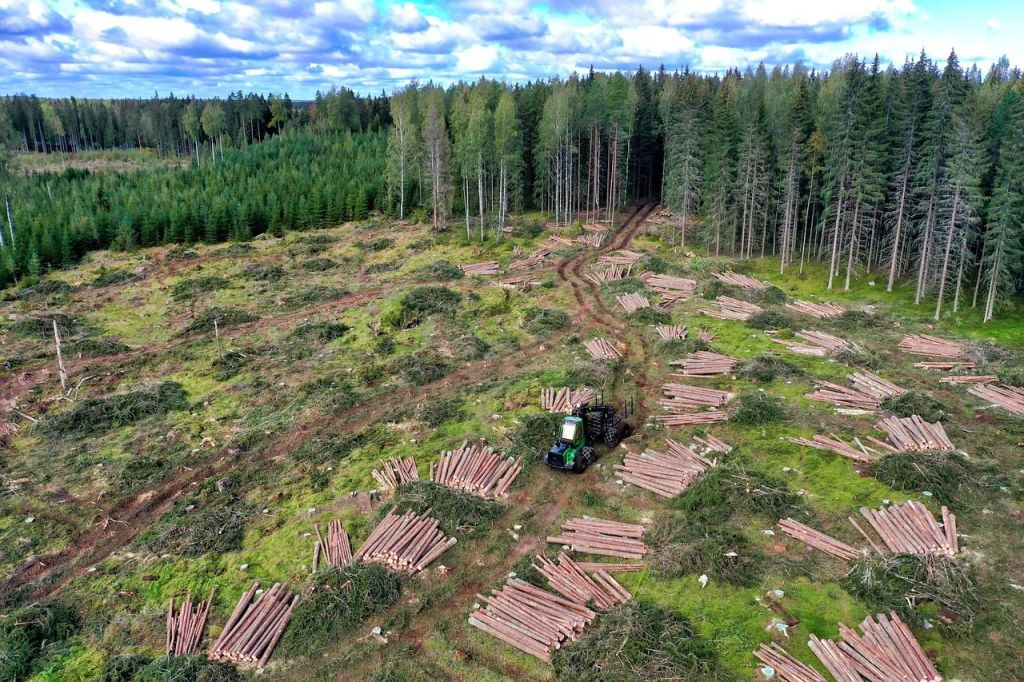
Illegal logging, wood harvesting, crops encroachment, farmland expansion, and livestock grazing all threaten protected forests. These activities are frequently linked to the illegal economy and can wreak havoc on even the most well known tourist destinations. Since 2000, World Heritage forests have lost approximately 3.5 million hectares, which is more than the area of Belgium. Certain places,such as the Ro Plátano Biosphere Reserve in Honduras and the Tropical Rainforest Heritage of Sumatra in Indonesia, have lost so much due to logging and agriculture that the now release more carbon into the atmosphere each year than they take in.
3. Fragmentation and Loss of Connectivity:
Surrounded by roads, cities, and farmland, many protected forests become isolated islands in transformed landscapes. This fragmentation breaks vital wildlife corridors and weakens nature’s ability to resist disturbances or adapt to new threats. Many species, especially those needing large territories like elephants or large cats, are especially vulnerable in fragmented landscapes.
4. Other Dangers:
Illegal hunting reduces the number of wildlife, invasive species and unregulated tourism that leave behind pollutants such as plastics, etc., also threaten the ecological balance. Reduces the resilience of forests. This makes forests more susceptible to degradation.
The Social Side:People in the Picture
World Heritage forests aren’t just natural treasures.They are sources of identity and well-being for millions of peoples. Many sites allow indigenous co-management, recognizing local stewardship that has deep roots in the land and critical knowledge about sustainable living. These partnerships can help protect forests and their climate benefits, as seen in the Wet Tropics of Queensland in Australia. This cooperative management has become a model for integrating community rights and conservation goals.
Finding Solutions: Pathways to Protection
So, what can we do to protect these forests and keep their carbon-saving role strong for generations to come?
The report identifies three main “pathways for action”:
1. Respond Rapidly to Climate Events:
Wildfires and storms are striking more often and with greater intensity. Quick intervention is crucial. Tools like the Rapid Response Facility (RRF), set up by UNESCO, provide emergency funding to stop fires before they escalate in protected sites. Using real-time satellite fire alerts, officials in places like Indonesia have managed to cut fire response times dramatically, showcasing how technology and fast action can limit devastation.
2. Maximize Intactness and Connectivity:
Keeping forests large, unbroken, and connected is vital. Integrating buffer zones (areas of managed forest around site boundaries) can help absorb shocks and keep the ecological network healthy. For example, the Sangha Trinational site in Central Africa, with its buffer zone involving sustainable logging, outperforms nearby reserves in terms of net carbon absorption and ecological stability. Recognizing and empowering indigenous and local communities as forest guardians is another proven strategy.
3. Integrate into Wider Policies:
World Heritage sites must be a central part of national and global efforts to tackle climate change, biodiversity loss, and unsustainable development. Including these sites in official climate and conservation planning, like the Sustainable Development Goals (SDGs) and Paris Agreement national action plans, ensures they get the political, financial, and community support they deserve.
Key Facts & Figures at a GlanceThe Stakes:
Why This Matters for All of Us
Losing the carbon sink power of World Heritage forests would have ripple effects far beyond their borders. Not only would it speed up climate change and the loss of plant and animal species, but it would also undermine fresh water supplies, disaster protection, and the way of life for millions of people worldwide.The solutions aren’t just about fences or fines. They involve investment, science, tradition, cooperation, and a global will to keep these places thriving. World Heritage forests are more than green dots on a map.They are living proof that nature, when cared for wisely, can be a powerful ally in the fight for our planet’s future.
A Call to Action
As individuals, we can support efforts to protect these forests by these ways:
- Raising awareness about their true value
- Supporting sustainable tourism and forest products
- Pressuring leaders to commit to ambitious climate action and conservation funding
- Educating ourselves and others about indigenous stewardship and local success stories
Let’s protect our World Heritage forests not just for their beauty or the carbon they store. For everything what they represent like resilience, hope, and the possibility of a better, more balanced relationship with our mother planet.
References:
UNESCO, WRI, IUCN, 2021. World Heritage forests: Carbon sinks under pressure. Paris, UNESCO; Washington, DC, WRI; Gland, IUCN.
“Savings a forest is an act of protecting humanity’s future, not just the environment”
 The Science Dialouge
Leave a comment