Can spirituality reduce the risk of addiction? Discover what a major 2026 scientific study involving over 540,000 people reveals about spirituality, mental health, and protection against alcohol and drug abuse.
Spirituality: The Invisible Shield Against Addiction
In today’s era, addiction is not just a personal problem, but has become a serious challenge for the entire society. The increasing use of alcohol, tobacco, marijuana and other intoxicants has affected millions of families. Scientists have been trying to find out for years why some individuals get caught in the cycle of addiction, while others stay away from it even in difficult situations.
A recently published important scientific study has tried to provide an interesting answer to this question. This study suggests that spirituality can be an important protective force against addiction.
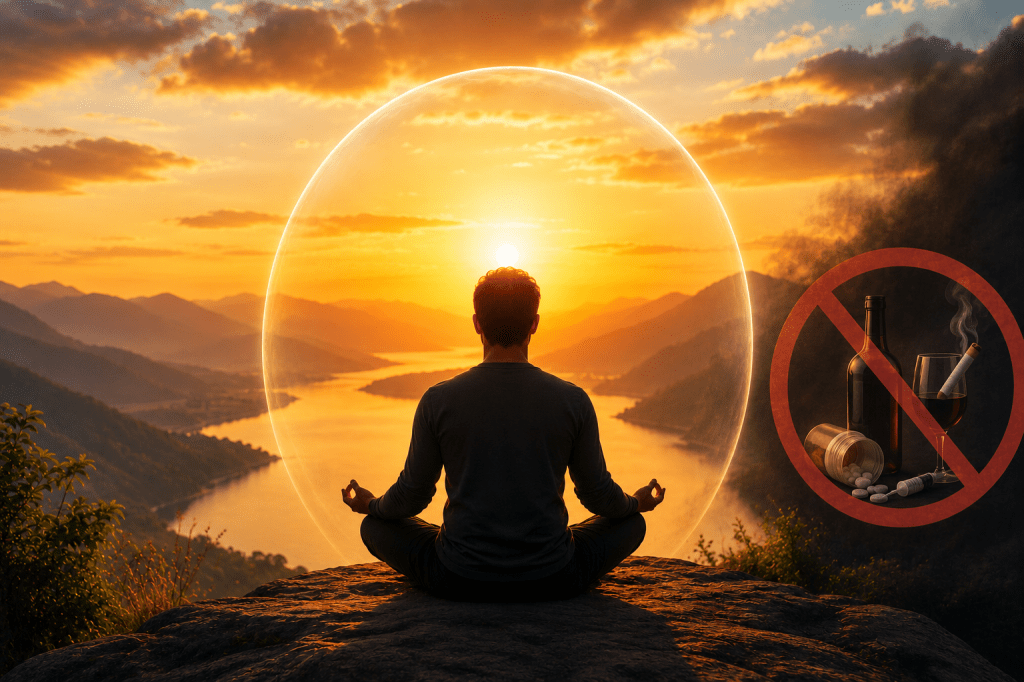
What is spirituality?
Many people consider spirituality and religion to be the same thing, but the two are not entirely the same.
Religion is usually associated with specific beliefs, rituals and traditions, while spirituality is the experience of a deeper meaning in life, inner peace, self-awareness and connection with a power greater than oneself.
A person can be spiritual whether or not they are religious.
When a person finds meaning in life, feels gratitude, meditates, feels connected to nature, or finds satisfaction in serving humanity, they are moving towards a spiritual experience.
Study on over half a million people
A large meta-analysis published in 2026 analyzed 55 long-term studies. A total of 5,40,712 people were included in these studies.
The researchers examined whether there was a relationship between spirituality and addiction.
The results were surprising.
Those who had more spirituality in their lives had an average of 13 percent lower risk of harmful use of alcohol and other drugs.
In addition, people who regularly connected with religious or spiritual communities had an almost 18 percent lower risk.
How does spirituality work against addiction?
The answer to this question lies in the human brain and mental health.
Finding meaning in life
One of the main causes of addiction is inner emptiness.
When a person loses his purpose in life, he may resort to drugs to get immediate pleasure or relief.
But a person who believes that life has meaning can face difficulties with greater strength.
He knows that life is not limited to today’s problems.
Healthy response to stress
Many people use alcohol or other drugs to escape stress, disappointment or loneliness.
But spirituality offers a person an alternative path.
Activities such as meditation, prayer, yoga, breathing exercises and self-reflection help to calm the mind.
When the mind is calm, the need for addiction may decrease.
Development of self-control
Spiritual traditions generally emphasize restraint, patience and self-control.
Scientific studies show that people with self-control are less at risk of addiction.
They are better able to resist immediate temptations.
Supportive community
Loneliness is a significant risk factor for addiction.
Spiritual or religious communities often provide a person with friendship, guidance, and emotional support.
When a person feels that someone is with them, they are less likely to resort to drugs during difficult times.
Is spirituality a complete cure for addiction?
No.
This study does not claim that spirituality alone can cure addiction.
Addiction is a complex problem that involves biological, psychological, social, and economic factors.
Some people may need medication, counseling, psychological treatment, and rehabilitation centers.
But spirituality can be a complementary tool that strengthens all of these treatments.
Modern science meets ancient wisdom
Interestingly, for thousands of years, various cultures and traditions have emphasized the importance of self-awareness, meditation, and inner peace.
Today, modern science is also slowly moving in the same direction.
Neuroscience shows that meditation and spiritual practices can activate parts of the brain that help with emotional regulation and decision-making.
Spirituality is therefore not just a matter of belief, but is also closely linked to mental health.
Final Thoughts
Spirituality is not the property of any one religion. It is an intrinsic need of human life.
Finding meaning in life, feeling gratitude, feeling connected to something larger than oneself, and striving for inner peace, all of these are part of spirituality.
Recent scientific evidence suggests that such a life perspective not only provides peace of mind, but may also protect against the harmful use of alcohol and other drugs.
Perhaps the most powerful weapon in the fight against addiction lies not outside, but within ourselves.
Reference: Koh, H. K., Frederick, D. E., Balboni, T. A., O’Reilly, S. M., Kelly, J. F., Humphreys, K., Botticelli, M., Mathur, M. B., Psimopoulos, C. S., Long, K. N. G., & VanderWeele, T. J. (2026). Spirituality and Harmful or Hazardous Alcohol and Other Drug Use: A Meta-Analysis of Longitudinal Studies. JAMA Psychiatry. DOI: 10.1001/jamapsychiatry.2024.4122


Leave a Reply